|
In every handful of soil, sleeps thousands of enemies; The seeds of weeds that, given the slightest moment of inattention, will gleefully smother all your hard work. But what if there was a way to turn your enemies superpower against them? A weed is just a plant that is growing unrequested. And the thing about weeds is that they are just so good at growing. They outgrow and smother just about any domestic plant. The weeds have the advantage, they have been growing and reproducing in this garden for generations. Through natural selection, the weeds have adapted to thrive in these conditions — clever little fellas. 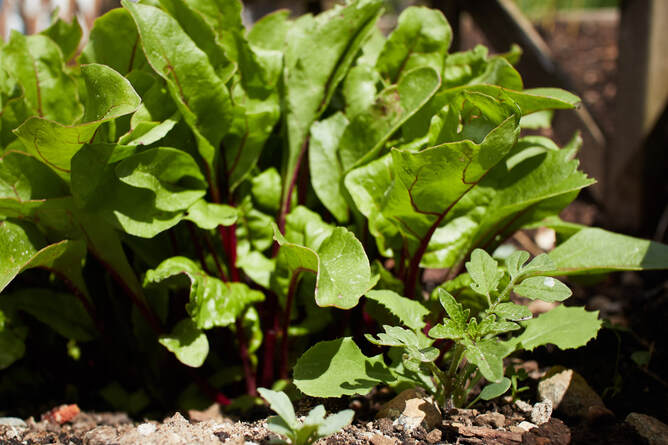 tomato weed growing among the chard As the weeds grow and reproduce, they create a seed bank in the soil. This is like a savings account of weed seeds that they can draw upon for future generations. Some seeds will stay dormant for over 100 years, waiting for their moment. No matter how many weeds we kill this year, there are always more seeds in the savings account. We can fight this seed bank with chickens, chemicals, fire, heat, cold, all sorts of things - but weeds are tricky and have evolved over the years to survive all of these torments. Let's face it, weeds are smarter than us and always will be. It's time to start playing the weeds' game - And Win! Click "read more" on the right to ...
How to make a deposit to your Seed Bank:Buying seeds - planting a green mulch Buying a cover crop kind of seeds and scattering them in the soil each fall and spring is a great way to get started. A low cover crop, like clover, can grow unobtrusively between the vegetables and actually help improve their performance by adding nitrogen to the soil. You can broadcast the seeds in the spring or fall, but I'm too lazy for that. Instead, I scatter when I'm disturbing the soil. Today I dug up potatoes, but first, I threw a few handfuls of sunflower and kale seeds. Later, I was weeding among the onions, and I didn't want them to be overshadowed by the kale. So I scattered some shorter crops like neeps and chard seeds before I began my weeding adventures. The big problem with buying seeds is that these plants, while desirable, are new to the area. They will help reduce the weeds, but they aren't always able to grow vigorously enough to compete with the weeds. What we really need is a way to beat them at their own game. 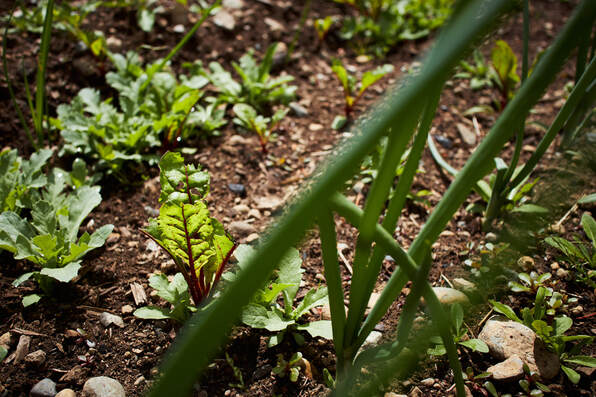
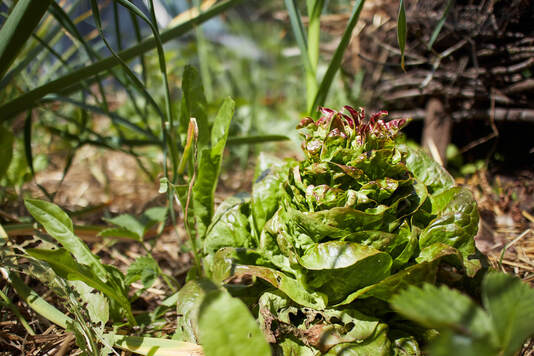
One year, I decided I wanted to create a landrace kale that would thrive neglected in my garden. I went to Seedy Saturday and bought one of every variety of non-dwarf kale (I don't like bending down to harvest) and mixed them together in a great big bowl. Two generations later, and the seeds I failed to collect fell to the soil. A bed of kale is growing in that part of the garden that is smothering some rather aggressive weeds.
But be choosy. It's important to know what has wild relatives in your area. I won't encourage carrots to self-seed because there are some toxic relatives in the area that will cross-pollinate and make super-weeds. Find out what's growing wild in your area before choosing a vegetable to let self seed. Comments are closed.
|
CategoriesAll Airwell Angora Animal Fibre Boring Community Cotton Dryland Farming Dye Etsy Shop Experiments Fibre Prep Finance Flax Frugal Household Management Indigo Linen Local Cloth Mediterranean Climate Natural Dye Permaculture Plant Fibre Sewing Silk Tutorial Urban Fibre Vintage Wildcrafting Archives
February 2022
|
 RSS Feed


|
Created by Tracy Wandling of One Wing Freelance Graphic Design
|